It's 2:47am. You've been lying in bed for two hours, doing the math on how many hours of sleep you can still get if you fall asleep right now. You're not just tired anymore. You're desperate for sleep, and the desperation itself is what's keeping you awake.
I've heard some version of this from hundreds of people I've taught over two decades of teaching meditation in San Francisco, and I've lived it myself. What most people do next makes it worse: they try harder. They clench down on the effort to sleep, check the clock again, and their nervous system reads all of it as an emergency.
There's a different way in, and it's almost embarrassingly simple: give your tired, busy mind a story to fall into.
Why You Can't Sleep Even When You're Exhausted
Here's the paradox that confuses desperate sleepers: your body is exhausted, but your brain is in high gear. That's not a character flaw. It's a nervous system that's stuck in a state called hyperarousal, the same revved-up activation you'd feel before a big presentation, except now it's aimed at the pillow.
When you're desperate for sleep, a few things happen at once:
- Your mind treats falling asleep as a task, and tasks create performance pressure
- Every clock glance triggers a small stress response (there's that math again)
- Your thoughts loop through tomorrow's worries because the brain, in the dark with nothing to do, defaults to problem-solving
The result is a nervous system that reads bedtime as a threat. Fight-or-flight chemistry and sleep cannot coexist. Your body will not power down while the alarm is ringing, no matter how exhausted you are.
This is why all the standard advice (no caffeine, no screens, dark room) often isn't enough for a truly desperate sleeper. Sleep hygiene removes obstacles to sleep. It doesn't calm the alarm. To fall asleep, you have to change the state of the nervous system, not just the bedroom.
Stop Trying to Fall Asleep (Seriously)
The single most useful reframe I can offer: sleep is not something you do. It's something that happens to you when conditions are right.
You can't force sleep the way you force yourself through a workout. But you can make yourself extremely boring to your own anxious brain. Sleep researchers have found that people who give their attention a neutral, low-stakes anchor fall asleep faster than people who try to suppress thoughts or empty their minds. This is why the classic advice of counting sheep is sort of right: it occupies the mind with something so dull the brain gives up and slides into sleep.
A sleep story does the same job, only much better.
What Is a Sleep Story? (And Why It Works)
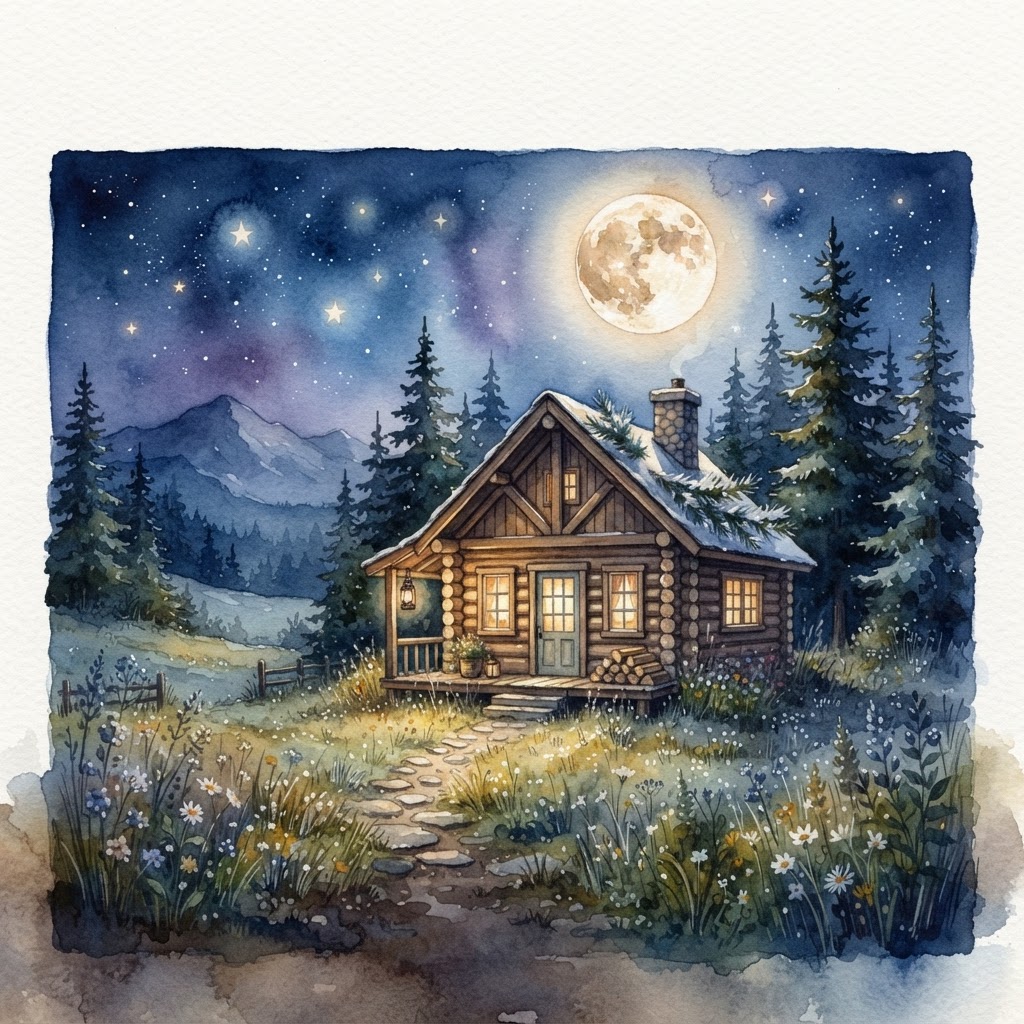
A sleep story is a calm, slow, narrated journey, usually 20 to 30 minutes, designed to be listened to with the lights off. The voice is low and steady. The imagery is soft and repetitive: a walk through a meadow, a cabin in the woods, moonlight on water.
Three things make this work on a nervous-system level:
1. It occupies the worrying mind. The loop of tomorrow's problems needs something to do. A story gives it a single, gentle thread to follow, which crowds out rumination without requiring any effort from you.
2. It signals safety. A slow, monotone human voice is one of the strongest cues of safety our nervous systems recognize. It's the sound of a trusted presence in a dark room. That cue activates the parasympathetic nervous system (rest and digest), the physiological state where sleep becomes possible.
3. It's designed to be unfinished. You are not supposed to hear the ending. The story is mildly interesting, monotonous enough, and paced just slowly enough that sleep arrives before the final scene. If you make it to the end, the story was too stimulating, not that you failed.
This is the difference between a sleep story and a thriller on Audible. Plot, stakes, and characters you care about keep the brain alert. A sleep story keeps just enough attention to stop the spiral, and no more.
Sleep Story: Cabin Beneath The Moon
This week on my podcast, Calm By Lane, I recorded a new sleep story for exactly this problem. It's called Cabin Beneath The Moon, and it runs about 25 minutes.
You'll walk a quiet path through a moonlit meadow, under pine trees, across a wooden bridge, and up to a small warm cabin where the light is on and the kettle is already hot. There's no plot twist. There's nothing to solve. There's just the path, the moon, and a voice that gets slower and quieter as you go.
You can listen here:
- Play Cabin Beneath The Moon on Apple Podcasts
- Or listen to the episode directly in any browser
Set the volume low, put the phone face down on the nightstand, and let the story run. If you're still awake at the end of 25 minutes, restart it. That's not failure. That's practice.
How to Use a Sleep Story Tonight
If you're desperate for sleep right now, here's the sequence I teach:
- Stop clock-watching. Turn the clock around or put the phone out of reach. Knowing the time only feeds the math.
- Get comfortable and warm. Cool room, warm body. Weight or an extra blanket helps signal safety to the nervous system.
- Start the story with the screen off. Dim the screen to minimum brightness, start the episode, then lock the phone and place it face down. The voice does the work; the screen undoes it.
- Follow the imagery loosely. Don't concentrate. Let the story wash over you the way you'd let rain fall on a window. Drifting attention is what you want.
- If your mind bolts awake, restart without commentary. No self-scolding. Just begin the story again, slower this time, and let it do its job.
Most people fall asleep somewhere in the middle of the story, and within a few nights, the opening of the story itself becomes a sleep cue. Your nervous system learns: this voice means safety, safety means sleep.
When Desperate-for-Sleep Nights Become the Norm
One or two rough nights happen to everyone. But if you're desperate for sleep more nights than not, that's your nervous system asking for more than a better bedtime routine.
Chronic sleep trouble is usually a capacity problem: the load you're carrying during the day is higher than the recovery you're getting at night, and your system is too activated to downshift. That's the exact problem I built my work around, from the stress tools in my toolkit to The Capacity Report, which shows you precisely how your nervous system is holding up under pressure and where your recovery is breaking down.
Start with the story tonight. It costs you nothing but 25 minutes in the dark, and it works with your nervous system instead of against it.
Sweet (and unforced) sleep.
Lane Kennedy is a meditation teacher and nervous system specialist in San Francisco, host of the Calm By Lane podcast, and author of Sobriety For Dummies. Her sleep stories and guided meditations are released weekly.