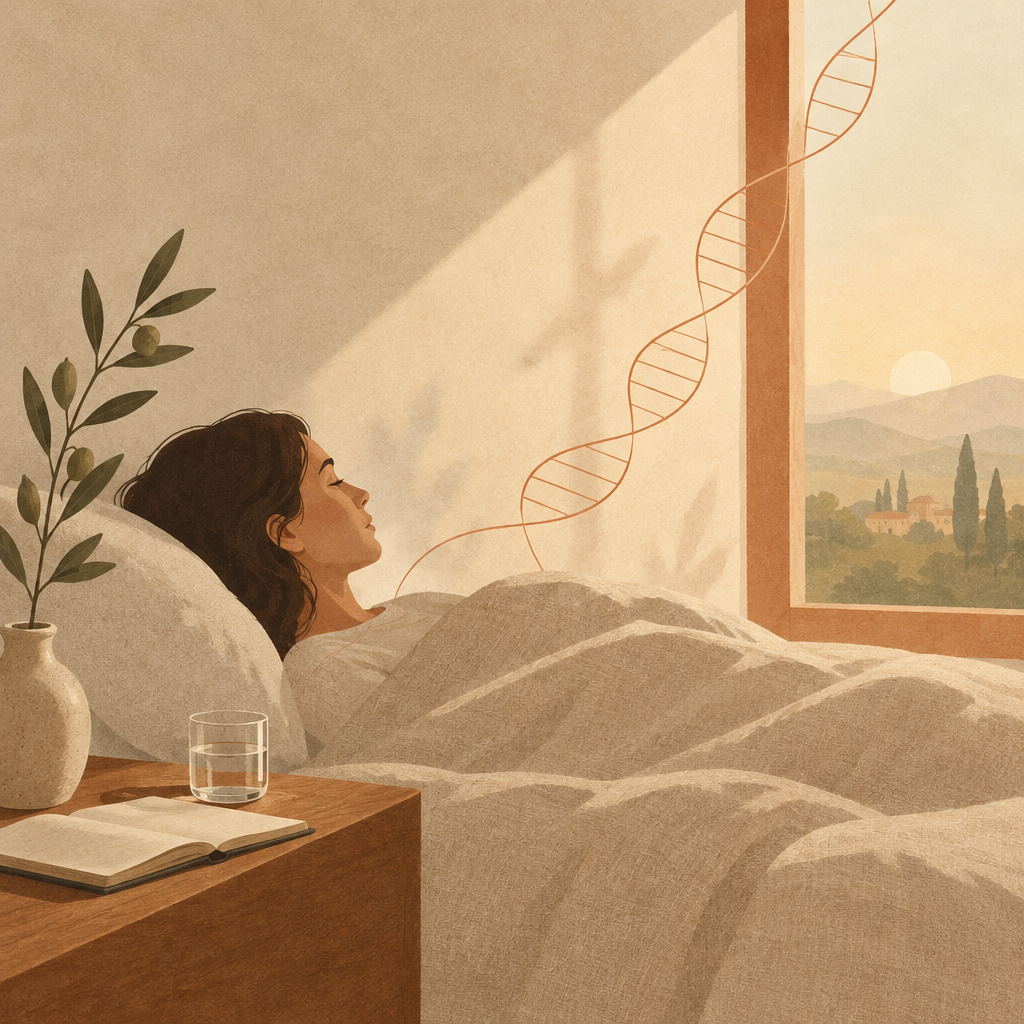
I am writing this from my bed on a Tuesday morning, seven months into what has been the most challenging period of my twenty-eight years of sobriety. The irony is not lost on me. Here I am, a functional DNA nutritionist who helps other people navigate chronic illness, living through my own perfect storm of Epstein-Barr virus reactivation and dysautonomia.
Ten months ago, I thought I had my health dialed in. I understood my genetic variants. I followed my personalized protocols. I felt confident in my ability to maintain wellness.
Then my body reminded me that viruses do not read textbooks. Sometimes even the most prepared among us get humbled by our own biology.
The past seven months have been a masterclass in surrender. When your spleen is inflamed and your heart rate spikes just from standing up, you realize that all the functional medicine knowledge in the world means nothing without the humility to apply it to your own healing. Recovery is not linear. Sometimes the most important medicine is simply showing up for yourself with compassion when everything feels like it is falling apart.
This is the blueprint I have been living inside, not just teaching.
The EBV Epidemic: Why Reactivation Is Increasing
Epstein-Barr virus reactivation has become increasingly common. EBV has been with humans for millennia, but the conditions that wake it back up have become more prevalent and more intense.
Approximately 95 percent of adults worldwide carry EBV, and an estimated 20 to 30 percent of those people will experience some form of reactivation during their lifetime.
The modern rise in reactivation comes from a perfect storm of environmental and lifestyle factors:
- Chronic stress. Financial pressure, work demands, and low-grade anxiety suppress immune function, leaving fewer resources for viral surveillance.
- Environmental toxins. Heavy metals, pesticides, mold, and electromagnetic radiation place an additional burden on the immune system.
- Dietary inflammation. A standard diet of processed foods, sugar, and inflammatory oils compromises the body's ability to mount an effective defense.
- Collective trauma. The stress of recent years, including social isolation and disrupted sleep, has created unprecedented levels of immune disruption.
That is what EBV reactivation asks of us: a complete reimagining of our relationship with our bodies, our limitations, and our capacity for resilience.
Acute vs. Chronic: Why the Distinction Changes Everything
Distinguishing between acute and chronic viral patterns is essential. This is not academic. It fundamentally changes how you approach treatment and what you can reasonably expect from your recovery timeline.
Acute EBV reactivation follows a specific trigger: a major surgery, another infection, or a period of intense trauma. Viral antibody levels spike, and the immune system mounts a vigorous, clear response.
Chronic reactivation is more complicated. The virus establishes a persistent, low-level presence that the immune system struggles to control. Over time, the immune system becomes exhausted from fighting a battle it cannot quite win.
My own experience has been a textbook case of chronic reactivation. My EBV Early Antigen antibodies have stayed persistently elevated, which points to ongoing viral replication. Unlike acute reactivations that may resolve in weeks, chronic patterns require a longer and more comprehensive approach, one that addresses the underlying immune dysfunction allowing the virus to persist in the first place.
Why This Is Really an Immune System Problem
EBV reactivation is primarily an immune system problem. That reframe matters, because it changes the goal. The goal is not simply to kill the virus. It is to rebuild the immune competence that controls the virus naturally.
Your immune system works in multiple interconnected layers, and any of them can become compromised over time:
- Innate immunity. This first line of defense, including natural killer cells, may become less effective at recognizing viral particles.
- Adaptive immunity. T cells and B cells can become exhausted from chronic activation, or develop tolerance to viral antigens.
- Regulation. The systems that keep your immunity balanced can be disrupted by constant external stressors.
When all three layers are strained at once, you get the pattern so many of us know by heart: symptoms that flare without warning, energy that disappears after ordinary tasks, and a body that seems to be fighting something it cannot name.
The Nervous System Is the Lever Nobody Talks About
Here is the part I wish someone had told me earlier in my own collapse. Your immune system does not operate independently of your nervous system. They are in constant conversation.
The vagus nerve, that long wandering nerve running from your brainstem to your gut, carries signals in both directions. It helps regulate heart rate and digestion, and it also carries anti-inflammatory signals that tell the immune system when to stand down.
Which means a body stuck in threat response is a body with less capacity to call off the fight. Not because you are doing something wrong. Because the physiology of chronic stress and the physiology of viral control are more connected than most treatment plans acknowledge.
This is why I do not treat these as two separate projects. Rebuilding immune competence and regulating the nervous system are the same piece of work, approached from two directions.
Your Recovery Blueprint: Three Places to Start
Healing from chronic viral reactivation requires patience, and it requires a focus on nervous system regulation. You can begin shifting your body toward repair with these practices.
1. Gentle Nervous System Anchoring
Focus on simple, repetitive grounding exercises that do not overtax your heart rate. Spend five minutes in the morning on slow nasal exhales, with the exhale longer than the inhale. This signals your autonomic nervous system that you are safe, which is a prerequisite for immune support. If five minutes feels like too much, do two. Consistency matters more than duration.
2. An Environmental Toxin Audit
Identify one source of environmental burden you can remove this week. It might be switching to a fragrance-free cleaning product, adding a water filter, or limiting screen time to reduce EMF exposure. Reducing total toxic load gives your immune system more bandwidth to focus on the virus. One change, not twelve.
3. Radical Self-Compassion
When you have a setback, resist the urge to push through the exhaustion. Practice the art of surrender by resting before you are forced to. Acknowledging your limitations is a strategic choice, not a failure of character and not a failure of your protocol.
What Recovery Actually Asks of You
If you have been treating your body like a problem to solve with the right supplement stack, I understand. I did the same thing. I built protocols for other people for a living, so of course I tried to build the perfect one for myself.
What changed things was not a new product. It was a shift in stance. I stopped asking what I could add and started asking what my body needed to experience, repeatedly, in order to believe it was safe enough to repair.
That is slower work. It is also the work that holds.
If you want the longer teaching on how the nervous system and immune system talk to each other, and the daily practice of downshifting a body stuck on high alert, that lives inside Out of Overdrive, my live online class.
Frequently Asked Questions
What triggers an EBV reactivation?
The most common triggers are prolonged stress, another infection, major surgery, mold or environmental toxin exposure, and periods of intense emotional strain. Anything that pulls immune resources away from viral surveillance gives a dormant virus an opening.
How do I know whether my EBV reactivation is acute or chronic?
Lab work matters here. Persistently elevated Early Antigen antibodies, combined with symptoms lasting months rather than weeks, point toward a chronic pattern. Acute reactivation usually shows a clear spike after a specific trigger and then settles. This is a conversation to have with a practitioner who can look at your full antibody panel over time.
Can diet really help with EBV and chronic fatigue?
Diet does not kill the virus, and anyone who tells you otherwise is selling something. What diet can do is lower systemic inflammation, reduce the total burden on your immune system, and give your body the raw materials it needs to function. Removing processed foods and inflammatory oils is a reasonable starting place, not a cure.
Why does stress make EBV symptoms worse?
Chronic stress keeps your body in a threat state, where resources are diverted toward immediate survival and away from long-term projects like immune surveillance and tissue repair. Stress hormones also interact directly with immune signaling. The virus is not responding to your emotions. It is responding to the environment your physiology creates.
How long does EBV reactivation recovery take?
There is no universal timeline, and I would be doing you a disservice to invent one. Acute reactivations can resolve in weeks. Chronic patterns often unfold over months, and progress is rarely linear. What helps most is measuring your trend across weeks rather than judging yourself by any single day.
What is the first step if I think my EBV has reactivated?
Get data before you get supplements. Ask for a full EBV antibody panel, including Early Antigen, and look at your symptoms alongside it. Then start with the least aggressive intervention available: rest before you crash, one environmental change, and a few minutes of slow exhaling each morning.
Work with Lane
You do not need another protocol built for someone else's body. You need to understand how your own immune and nervous systems are wired, and then build something small enough to actually repeat on your worst days.
Two places to start:
Lane Kennedy is a DNA functional nutritionist who helps people understand how their genetic makeup shapes their stress response, their immunity, and their capacity for recovery. Her 8-week program has helped hundreds of clients build protocols that work with their biology instead of against it. Learn more at lanekennedy.com or join the community at community.lanekennedy.com